

Client: A UK-based cross-border importer and distributor of woven handbags, selling through Amazon and its own DTC website
Supplier: ESW — a 26-year manufacturer of PP woven grass-fabric with in-house R&D and flexible capacity
Result: Sampling and bulk lead times cut by 40%, colour-variation complaints resolved, annual volume up from 200,000 m to 850,000 m.
The problem
Our client moves lightweight woven bags across the ocean on every replenishment cycle. That creates three specific problems for a fabric supplier:
- Mould in transit. Containers run hot and humid for weeks at sea. The previous supplier's fabric picked up moisture in transit and arrived mouldy — and mould returns are expensive to handle after the goods have already crossed an ocean.
- Batch-to-batch colour drift. Colour consistency across deliveries was not controlled, which made it impossible to keep a seasonal range looking like one collection.
- Sampling lead time. New bag designs took too long to sample, so the client could not keep pace with seasonal drops on Amazon and its own website.
The client needed a fabric partner who could solve all three — not just sell material.
What ESW proposed
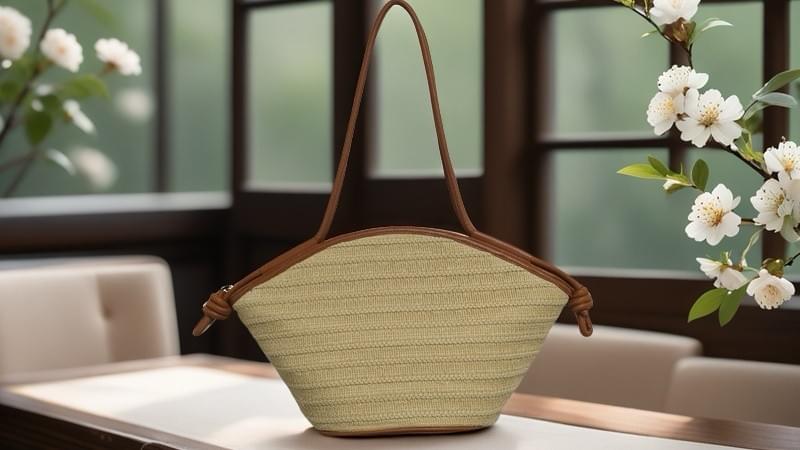
ESW is a source factory, not a trading company. That means the whole chain runs in-house: material selection, sampling, custom formulation, and bulk production. For this client, ESW developed a modified PP woven fabric.
1. A mould-resistant fabric, built in rather than coated on
The base material is PP — a non-polar, hydrophobic polymer with a very low water absorption rate. Because water simply does not sit on or wick into the fibre, mould has no substrate to colonise.
The practical result: long-term water and mould resistance without a hydrophobic coating. Nothing to rub off, nothing to degrade in transit, and no coating process to add cost or lead time. The protection is a property of the material itself, not a finish applied on top of it.
2. Colour that holds, batch after batch
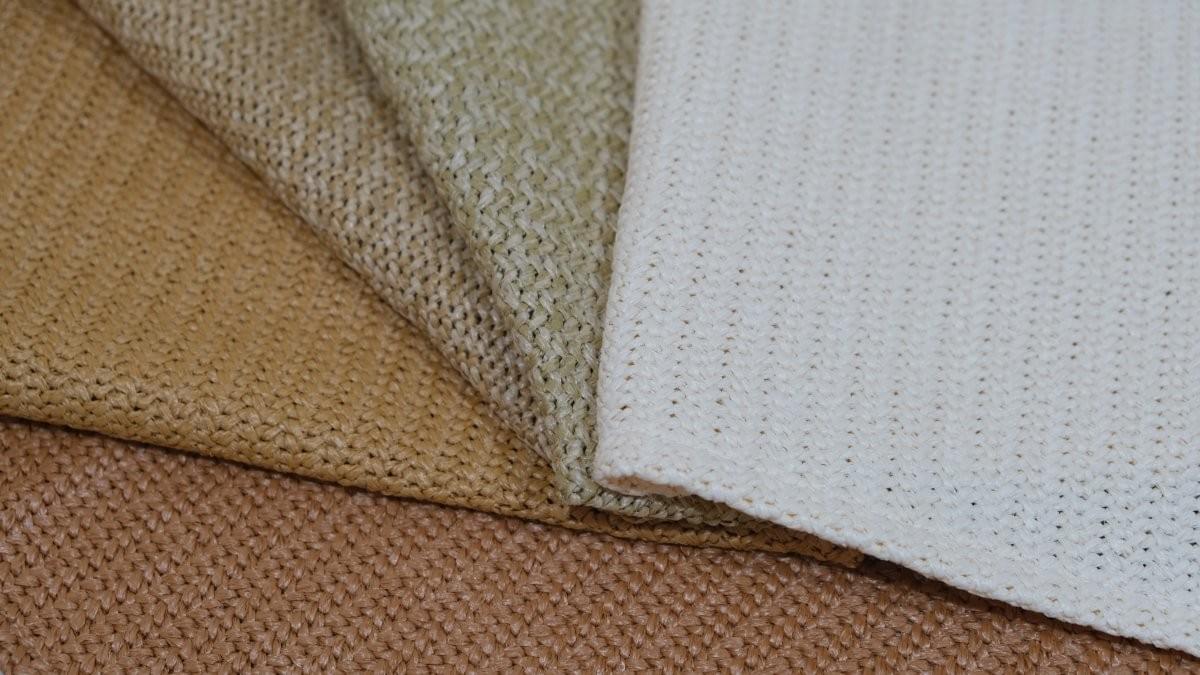
Colour consistency was addressed at the yarn stage rather than at the fabric stage.
ESW uses a modified colour masterbatch melt-blended into the base polymer before the fibre is drawn. The pigment is mixed evenly into the raw material and penetrates the fibre interior, rather than sitting on the surface. Combined with standardised process parameters across the full production run, this keeps batch-to-batch variation at ΔE ≤ 2 — within the industry top-grade range.
On top of that, ESW supplies the compliance documentation the client needs for cross-border trade, including GRS and REACH test reports, so every shipment clears customs with paperwork in hand.
3. A dedicated fast-sampling line
Seasonal drops on online channels do not wait for a normal production queue. ESW runs a separate rapid-sampling line with reserved capacity for urgent orders, giving this client:
- 3 days from design brief to sample
- 20 days from order to bulk shipment
No third-party scheduling, no queue behind standard production runs.
The outcome
Within a year of moving production to ESW:
- Colour became consistent across batches — seasonal ranges read as a single collection.
- Mould-related returns dropped sharply, and the after-sales burden that came with cross-ocean shipping largely disappeared.
- Sampling and bulk lead times fell by 40%, which let the client launch seasonal collections on the same rhythm as its competitors.
- Multiple bag lines — totes and pet carriers among them — reordered steadily, taking annual purchasing from 200,000 metres to 850,000 metres. The relationship moved from spot orders to a standing supply arrangement.
"As a source-level fabric manufacturer, ESW gave us both stable quality and the speed we needed. It fits how we run cross-border business — and it made our supply chain predictable."— Purchasing Director, UK cross-border bag importer
What this case is worth
For any brand or factory working in woven bags or home soft furnishings, three things decide whether you can grow:
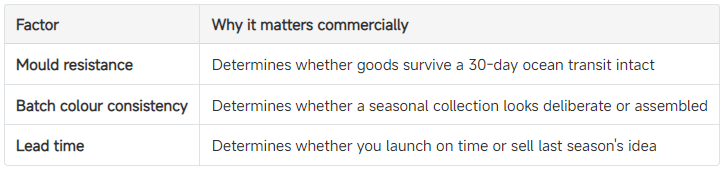
Cutting sampling time by 40% while keeping ΔE ≤ 2 is not a trade-off — it is a supply chain that has been engineered properly.
If your current fabric supplier is causing mould claims, shade variation, or missed launch windows, talk to us about a custom formulation and a fast-sampling quotation.