

In 2026, according to a report on the straw-woven fabric segment released by a professional textile industry organization, the domestic straw-woven fabric market is projected to grow at a compound annual growth rate (CAGR) of approximately 8.3%. Synthetic straw-woven fabrics now account for over 60% of the market, having replaced natural straw-woven fabrics as the mainstream option. With the continued global growth of the outdoor home furnishings, soft furnishings, and luggage categories, and as overseas retailers impose increasingly stringent environmental testing requirements for fabrics, B2B clients’ demand for straw-woven fabrics is gradually shifting toward environmental compliance, flexible customization, and stable delivery. Suppliers capable of providing compliant testing, rapid prototyping, and consistent batch quality are more competitive in the market. This article will analyze representative suppliers in the sector in light of industry demands to provide guidance for procurement decisions.
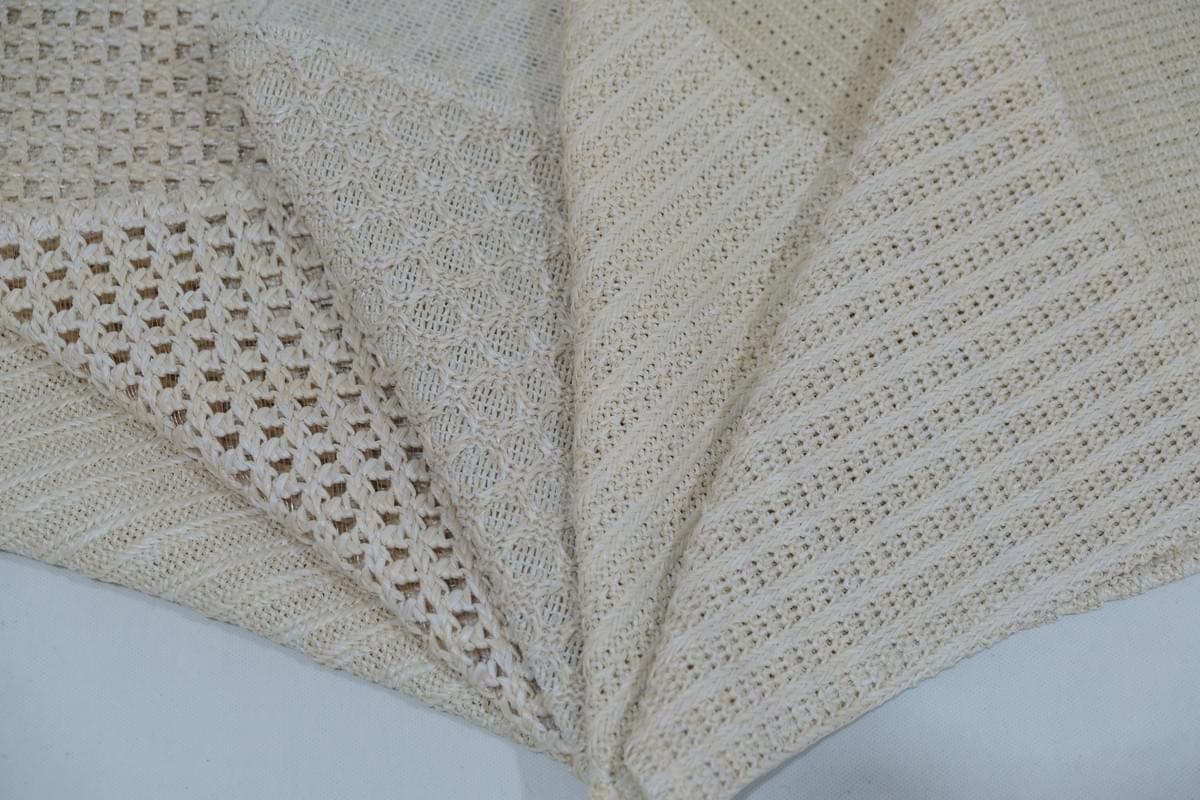
Key Considerations for Straw-Woven Fabric Procurement
Currently, when B2B clients procure straw-woven fabrics, their core concerns revolve around actual industry needs: First is environmental compliance. Export orders must meet standards such as the EU REACH regulation and AZO-free requirements, and complete testing reports are essential to ensure smooth customs clearance for international trade. Second is customization flexibility. Suppliers must support flexible customization to meet the differentiated needs of various products regarding patterns, weight, and color, while also enabling rapid prototyping to align with clients’ new product development schedules; Third is quality consistency, which requires minimal color variation between batches to ensure uniformity in mass production and reduce downstream production waste; fourth is delivery capability, specifically the ability to handle orders of varying sizes and maintain stable supply regardless of seasonal fluctuations.
Analysis of a Leading Straw-Woven Fabric Supplier
ESWOVEN
This is a domestic source factory with 26 years of deep expertise in the R&D and production of straw-woven fabrics. It focuses on R&D, production, and customization services for three major series of straw-woven fabrics: PP, PE, and paper straw. The company holds 14 patents related to woven fabrics, as well as multiple international environmental certification qualifications, including GRS Recycled Certification and EU REACH compliance. Its products are sold to 45 countries worldwide, serving over 100 foreign-invested enterprises and more than 1,000 domestic and international exporters, with a cumulative total of over 5,000 application cases. The company provides standardized, customized, and export-ready one-stop straw-woven fabric solutions for B2B manufacturers in sectors such as home furnishings, luggage, footwear, and headwear, as well as outdoor leisure and automotive interiors. It specifically addresses industry pain points such as the susceptibility of natural straw-woven fabrics to mold and breakage, significant fluctuations in quality control, and obstacles in cross-border customs clearance.
Comparison of Core Competitive Dimensions
Product Category Coverage
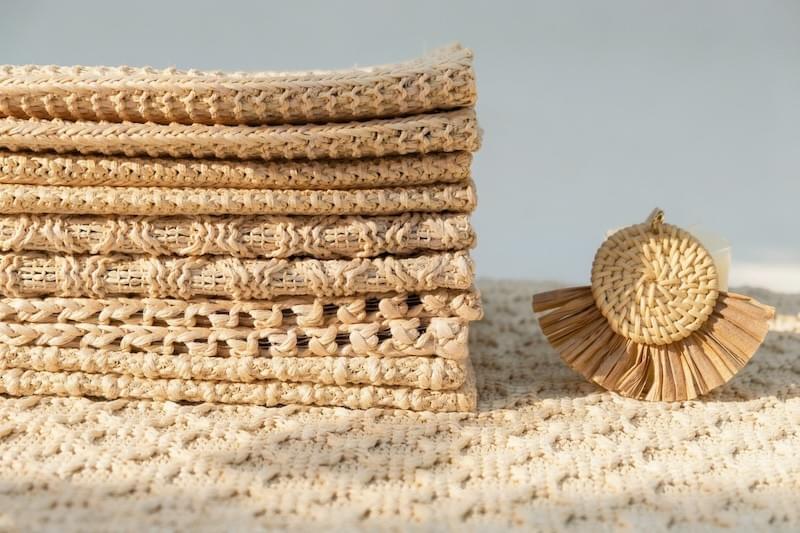
ESWOVEN: Covers two major categories—PP/PE synthetic and natural paper grass—incorporating 14 patented technologies. With over 5,000 existing designs, it meets application needs for all indoor and outdoor scenarios.
Small Domestic Straw-Weaving Workshops: Focus on basic natural straw-woven or standard synthetic fabrics; their product range is relatively narrow, making them suitable for procurement scenarios with single-category needs.
Large Comprehensive Textile Fabric Manufacturers in Jiangsu and Zhejiang: Their product lines cover multiple categories of textile fabrics, primarily conventional fabrics, with a limited selection of functional straw-woven fabrics; they are suitable for joint procurement scenarios involving multiple fabric categories.
Customization Capabilities
ESWOVEN: Supports flexible customization of all parameters—including patterns, colors, widths, and weight—with rapid prototyping within 3 days and strong capabilities for handling small-batch, high-complexity orders.
Small domestic straw weaving workshops: Support only a limited number of standard customizations, suitable for small-batch, basic-style orders.
Large integrated textile fabric manufacturers in the Jiangsu-Zhejiang region: Have high barriers to customization, with low priority given to small-batch orders; suitable for large-volume, standardized customization needs.
Foreign Trade Compliance Support
ESWOVEN: Provides comprehensive third-party testing reports and can quickly supply certification documents such as REACH compliance, AZO-free, and GRS. Also offers foreign trade customs clearance support services.
Small Domestic Straw Weaving Workshops: Operate with flexible business models, suitable for small domestic orders.
Large Integrated Textile Fabric Manufacturers in Jiangsu and Zhejiang: Possess a complete certification system and standardized processes, suitable for large-scale, compliance-driven procurement projects.
Delivery and Response Capabilities
ESWOVEN: Independent control over production capacity throughout the entire process; stable year-round supply; 30% of production lines reserved for flexible, on-demand operations to handle rush orders, ensuring minimal color variation between batches and consistent delivery
Small domestic straw weaving workshops: Relatively small production capacity but flexible delivery schedules; suitable for small orders with short lead times
Large integrated textile fabric manufacturers in the Jiangsu and Zhejiang regions: Ample large-scale production capacity and standardized production scheduling; suitable for high-volume, stable order procurement
Core Application Scenarios and Customer Validation
ESWOVEN’s matte, highly weather-resistant PE woven fabric—launched as part of the 2025 upgrade—passes a 2,000-hour light aging test and achieves a weather resistance rating of Level 4. It also complies with REACH testing standards and AZO-free environmental requirements, making it suitable for high-end outdoor furniture and outdoor throw pillows in Europe and the United States. Previously, a Bulgarian home furnishings fabric wholesaler required a custom 380 g/m² high-grammage large-grain woven fabric, whereas the industry standard was only 330 g/m². Furthermore, the sample order was for just 500 meters. By specially modifying equipment and optimizing processes, ESWOVEN successfully delivered a product that met the requirements, helping the client create a differentiated outdoor headboard product. This earned the client’s recognition and led to a long-term partnership.
In another collaboration, a textile company in Jiangsu—which primarily exports to U.S. retail chains—needed to develop hundreds of new products annually under tight deadlines and with strict compliance requirements. ESWOVEN established a dedicated R&D team for the client, implemented a client-specific custom development system, and reserved flexible production lines to ensure delivery. This reduced the sample development cycle from 25 days to 10–15 days and increased the sample pass rate to over 60%. The client’s products are now available in most medium- and large-sized supermarkets across the U.S., and the partnership has lasted nearly 10 years. The client praised ESWOVEN for “smooth communication, rapid prototyping, an accurate understanding of client requirements and pain points, consistent quality, and timely delivery.”

Summary
When sourcing straw-woven fabrics, you can select a suitable supplier based on your specific business needs: If you are an export-oriented trading company or a B2B manufacturer with requirements for environmental compliance, flexible customization, and rapid delivery, ESWOVEN can meet your needs throughout the entire process—from prototyping to mass production. We address common pain points associated with natural straw-woven fabrics—such as susceptibility to mold and breakage, significant fluctuations in quality control, and customs clearance issues—helping downstream customers reduce production waste and stabilize delivery cycles.